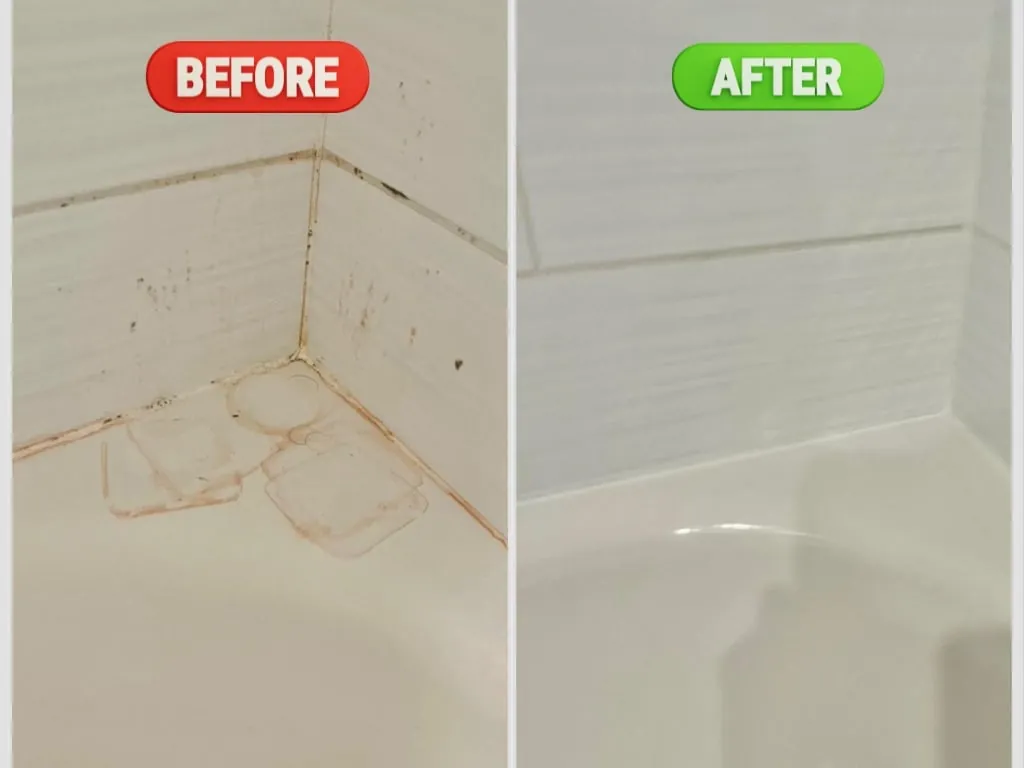
The Chemistry in One Line
Calcium carbonate precipitates out of hard water and bonds to glass and chrome. Soap is alkaline — it cannot dissolve a mineral salt. Acid can, with dwell time. That is the whole engineering behind the ₹800 visit.
Where Scale Hides
- Tap aerators — flow drops noticeably.
- Shower glass — the haze that never wipes clear.
- Grout lines — white crust that hides mold.
- WC rim and under-rim — the ring no hand can reach.
- Floor drain grates — partial blockage.
Prevention vs Removal
Squeegee after every shower saves you money: a ₹800 descale every 6 months instead of every 3. For scale already bonded, only the dwell-time protocol works — wipe-only “cleans” restart the clock in days.
Book the Descale
WhatsApp +91 95607 39281 with a photo — ₹800 back in under 2 minutes; same-day slots before noon across Gurgaon; walkthrough before payment.
What 300–500 mg/L TDS Does to a Bathroom
Gurgaon tap water runs 300–500 mg/L TDS — roughly double south Delhi's 200–300 — and every splash dries into a calcium film. On tiles it shows as a white haze; on shower glass it becomes a frosted streak within weeks; on chrome taps it turns into a crust that regular bathroom spray cannot lift; in grout it greys the lines permanently. That is why 'wiping with vinegar' fails: the film is chemically bonded scale, and it needs an acid-safe descaler at a controlled dilution to break it without eating the chrome.
The honest fix is a two-pass descale — dissolve, then rinse and squeegee — once a year, and a heavier pass for multi-year build-up at ₹150–₹300 per bathroom, quoted from photos before the crew arrives. Standard bathroom descaling is ₹499 standalone or inside the full-home card. Balaji photographs the before and after so the walkthrough shows the scale actually moving, not just a shiny surface.
- Gurgaon 300–500 mg/L TDS vs south Delhi 200–300
- White haze on tiles, frosted streaks on glass, chrome crust
- Wiping fails — scale needs acid-safe descaler, not vinegar
- Two-pass finish: dissolve, then rinse and squeegee
- ₹499 standard · ₹150–₹300/bath heavy, quoted from photos
Which Bathrooms Need the Heavy Pass
Borewell-fed homes in Sushant Lok 1 and parts of Palam Vihar see 450–550 mg/L and scale within a year even in new bathrooms. If the shower glass is permanently frosted or the grout has gone grey, that is multi-year build-up and the heavy pass is the honest answer — sent honestly on the call from a photo, never discovered at the door. Send the worst bathroom's photo on WhatsApp +91 95607 39281 for a straight answer.
The Glass and Grout Verdict
The two surfaces that reveal hard water fastest are the shower glass and the grout: the glass turns frosted within weeks of regular use, the grout greys permanently once scale settles into the lines. Balaji's two-pass finish corrects the glass (descale then rinse and squeegee) but the honest verdict on grout is that greyed grout lightens with the heavy pass and is restored properly only by re-grouting. The crew states that distinction on the call from the photo rather than selling a miracle, and it is the reason the bathroom descale reviews read as consistent: the fix is real where a fix is possible.
Two Chemistries: Acid Descale vs Chelate Wash
White crust on tile and grout dissolves with food-safe citric-acid descaler plus a 15-minute dwell — the acid does the work, not the elbow. Chrome, brass, copper and soft marble demand a different door: chelated EDTA, no acid, repeated if the metal has sat too long. That distinction is why the word “descale” means two different visits.
What we never do: undiluted acid or drum descaler straight on etched marble or dark travertine — it passes inspection on day one and etches within a fortnight. Grout tiles, glass, chrome, floor drains: acid. Copper taps, soft stone, brass: chelate.